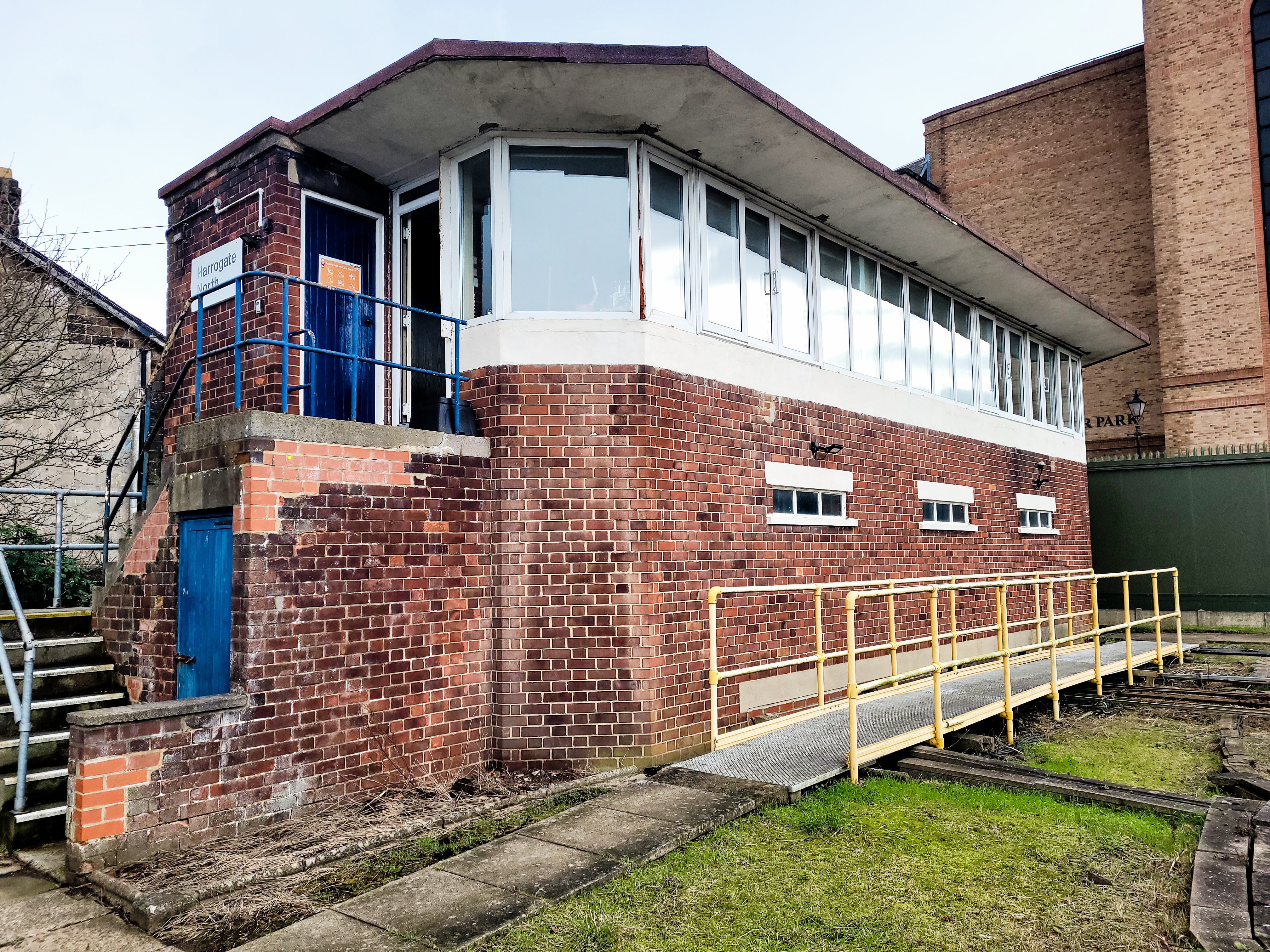
On Saturday 21st February 2026, a number of club members had the opportunity to visit the signal box at Harrogate railway station.
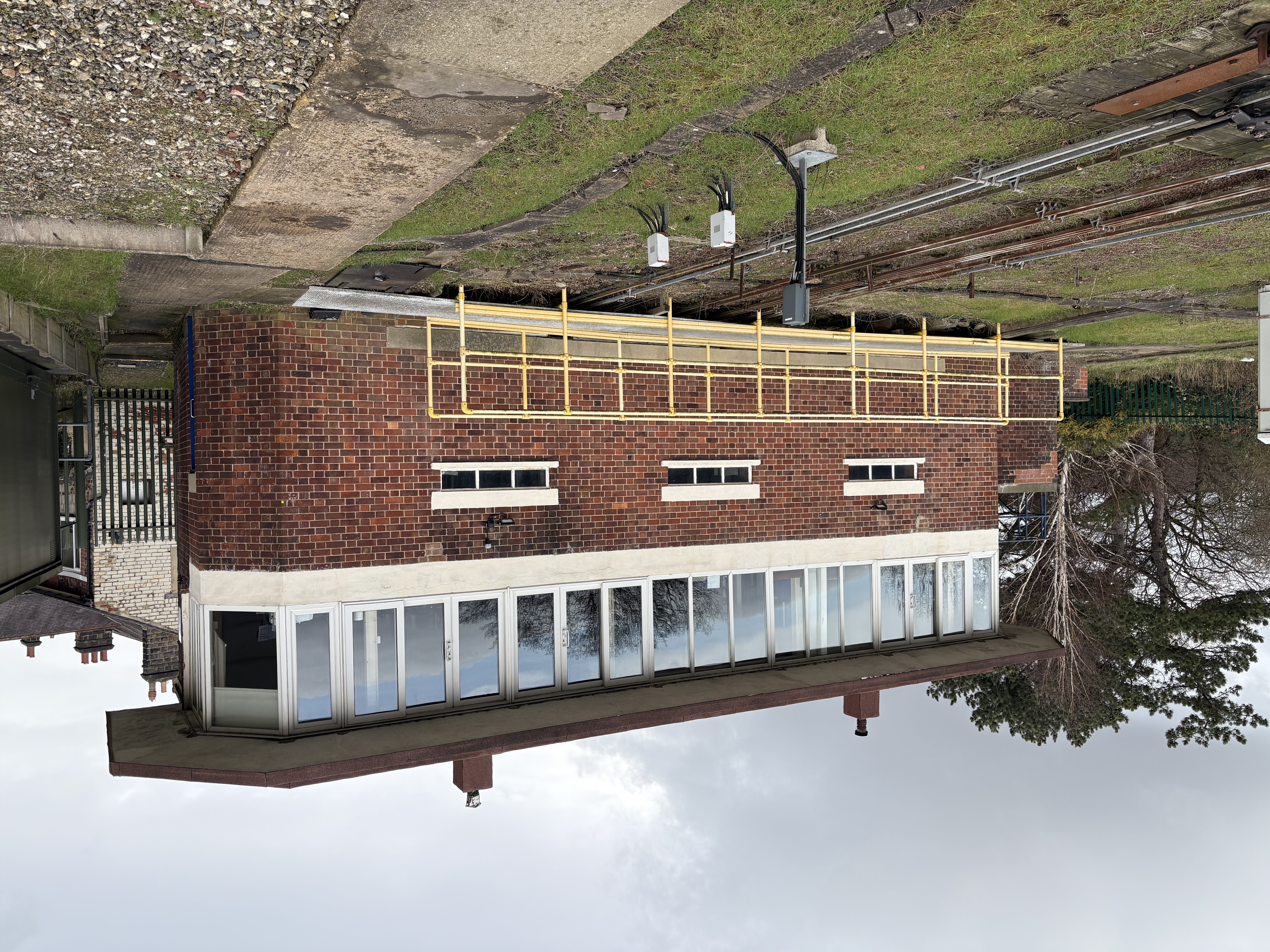
The signal box, known as Harrogate North, is beyond the end of platform three at the station, being obscured from direct view by part of the station complex, and is accessed via a short trackside walk.
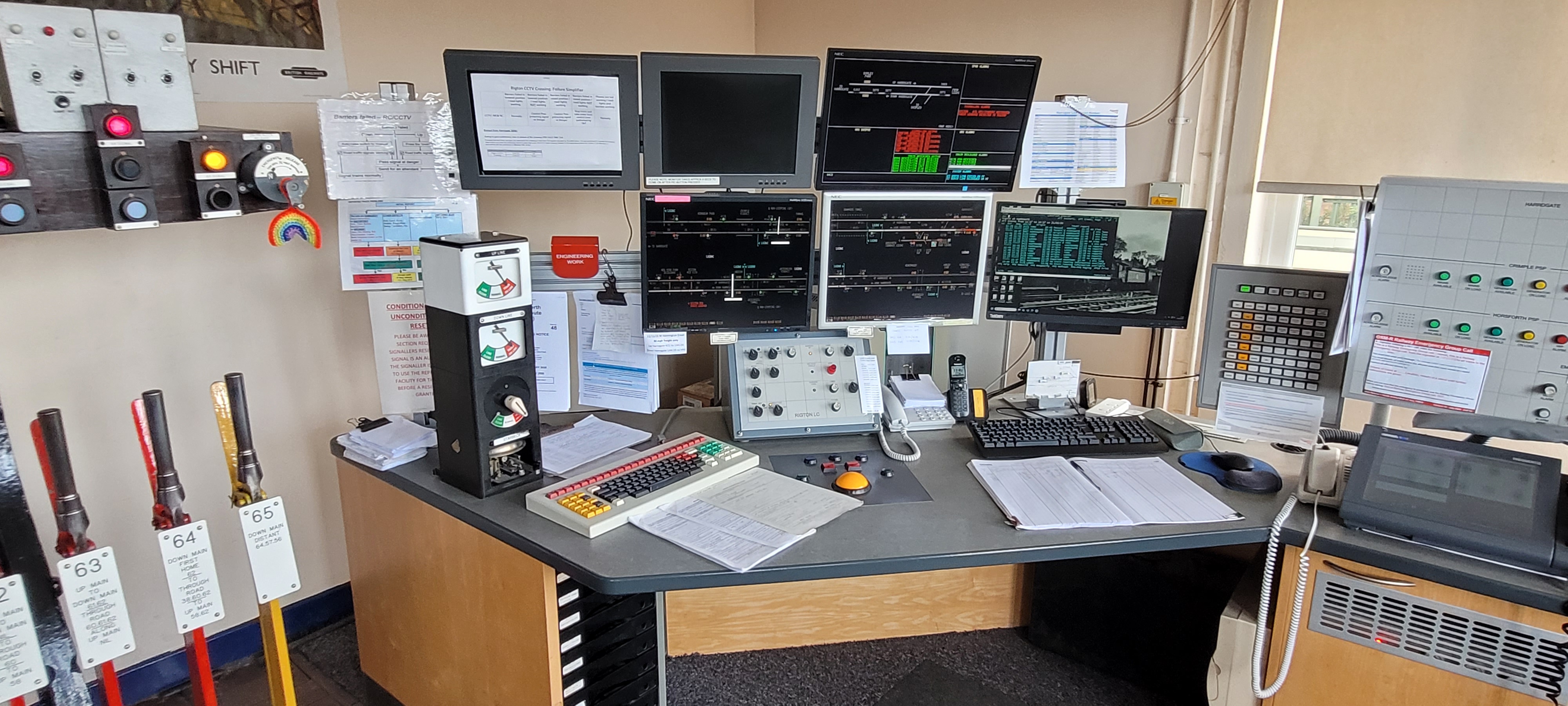
The signalman (or is that signal person or signal box operator?) Matt, gave us a realtime view of how a modern signal box operates as he carried out his many duties, explaining to us about how the signal box operates along with his experiences as a fifth generation railway employee of some thirty plus years standing.
The signal box is responsible for the signals, points and level crossings between Horsforth and Starbeck. Such operations are managed by levers housed in an interlocking frame, modern computer systems and block control. Other signal boxes on the line, such as Harrogate South, no longer exist.
The current box was built in 1947. Its design and planning started towards the end of World War Two in 1944, the structure being intended to better stand possible airborne attacks from German aircraft.
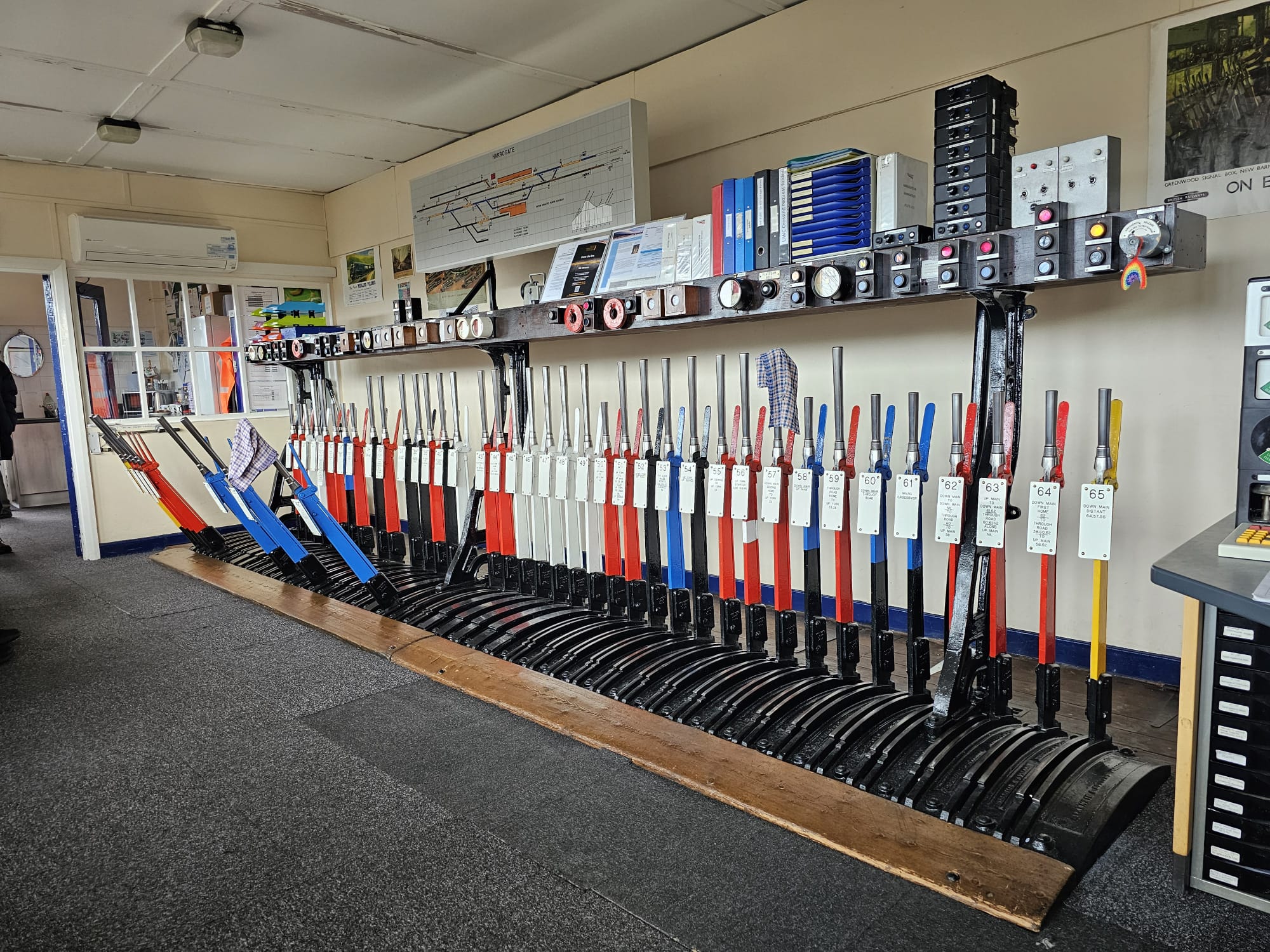
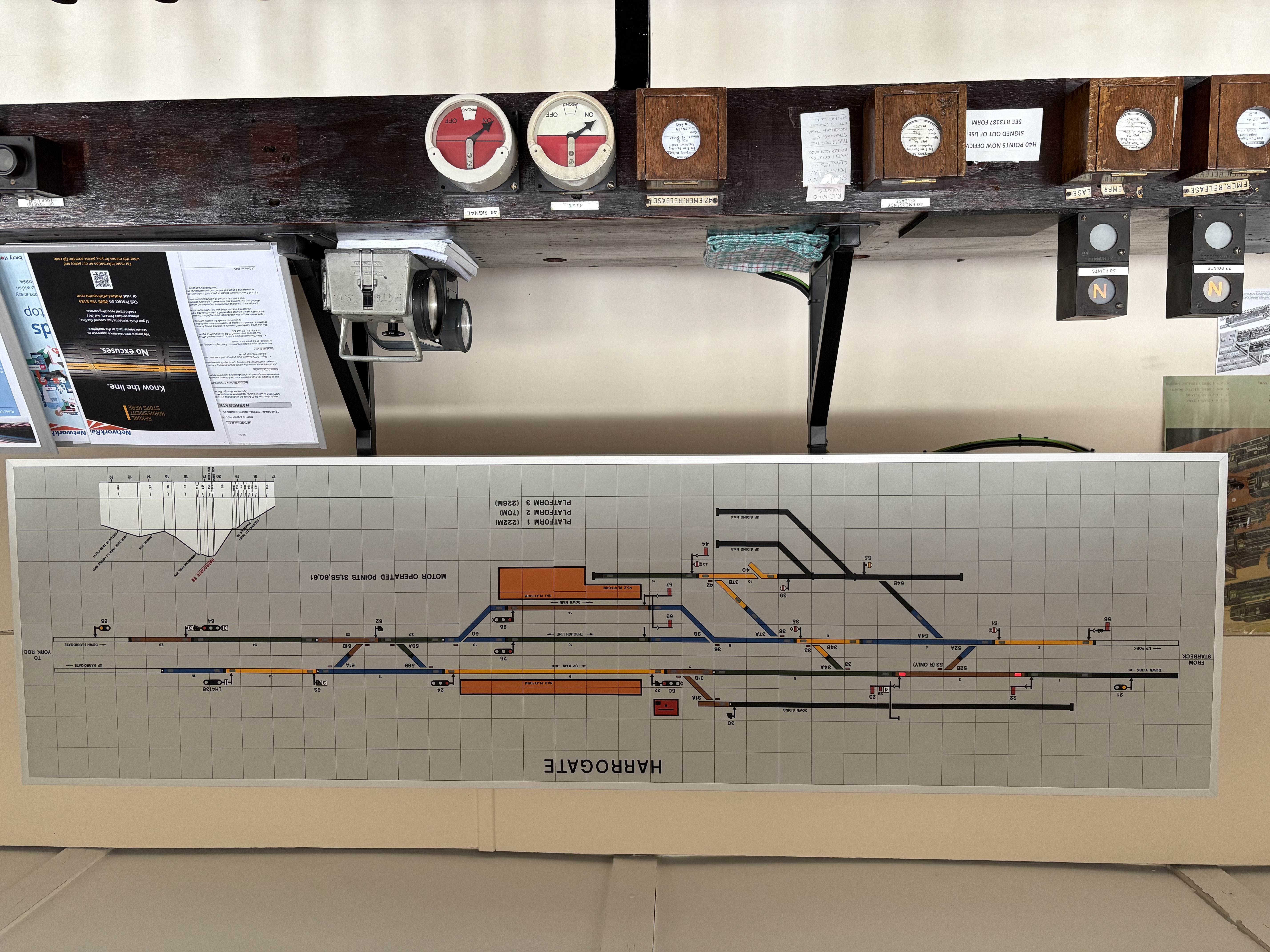
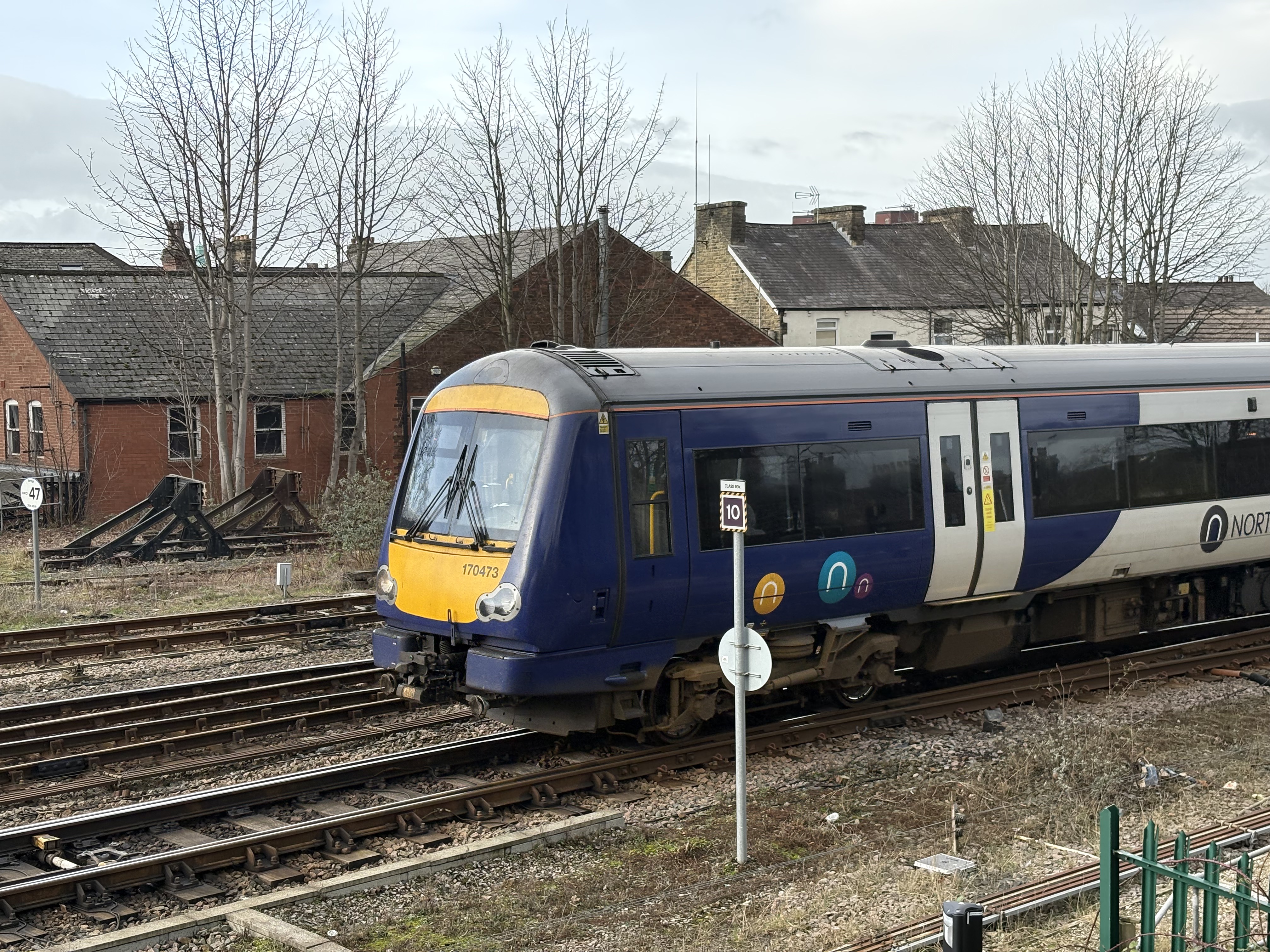
Although static displays of signal box interiors are available to see at places such as the National Railway Museum in York, seeing the system in operation first hand, controlling the many Class 170 sets and Class 800 Azuma trains that passed the signal box window during the visit made it clear just how complex the system is, even for a ‘small’ box like that at Harrogate.
Matt and his colleagues have to work twelve hour shifts for four consecutive days before having two rest days. The signal box is manned (personed?) twenty four hours a day throughout the year. At the end of the normal operating day, when passenger services cease, there is often engineering works taking place at night. Signal box equipment has to be maintained, and every six months all signalmen have to be fully assessed to confirm their competence to work.
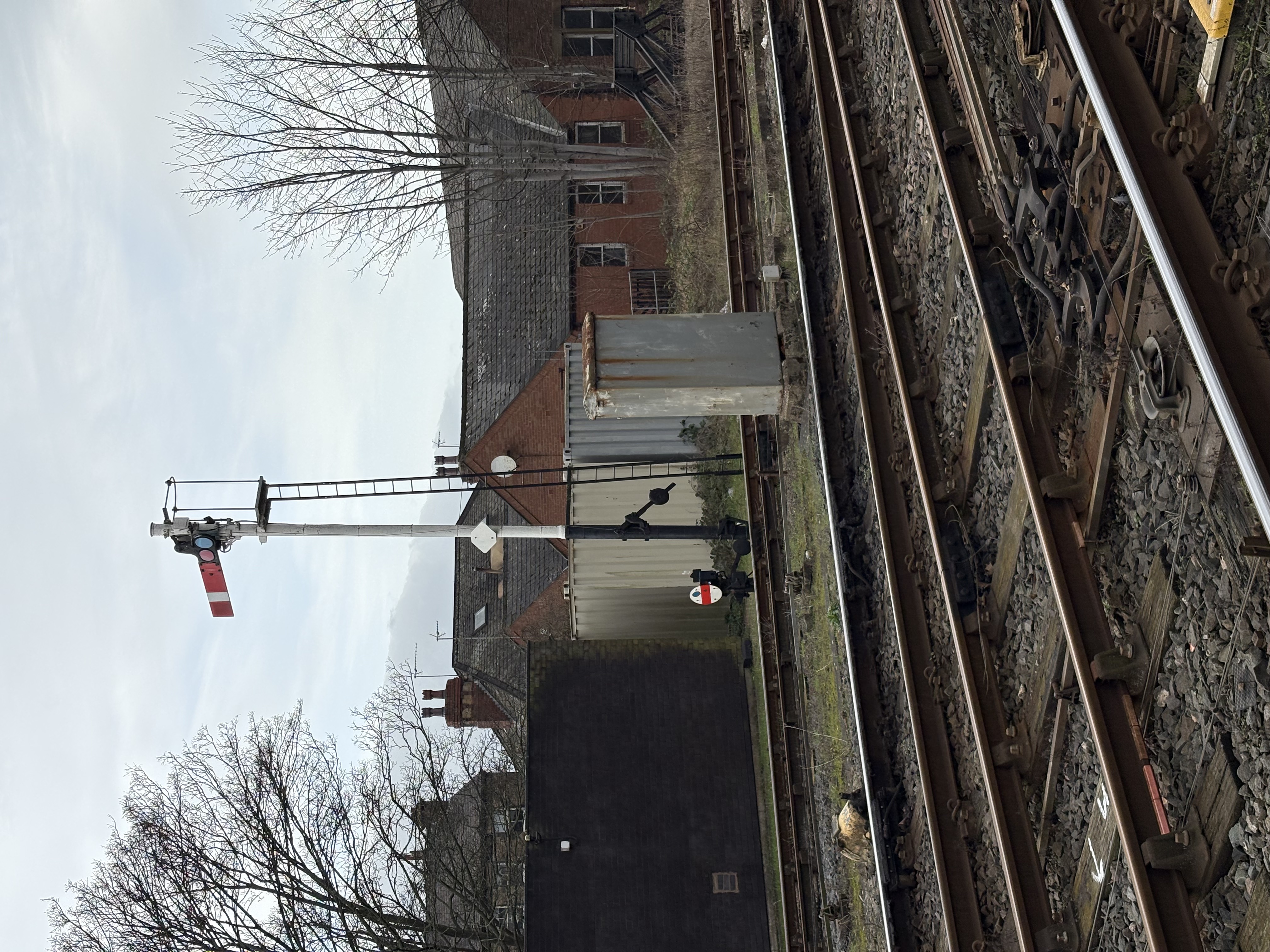
During the visit, Matt outlined some of the changes expected for the Leeds-Harrogate-York route. In 2012, the semaphore signals between Harrogate and Leeds were replaced with modern colour aspect signalling. The vast majority of the semaphore signalling between Harrogate and York, with perhaps the exception of the double home signal gantry at the far end of platform one at Harrogate station, is expected to be upgraded during 2026. Northern Rail is looking at replacing the Class 170 units that service the route with Class 195 sets, as the 170 units do not perform well due to gearing issues; some testing on the line using the 195s has already been undertaken. Services are also expected to be increased from four per hour to six, as the line, and Harrogate in particular, is now one of the busiest stations on the northern network after York, with its mix of both local and long distance services.
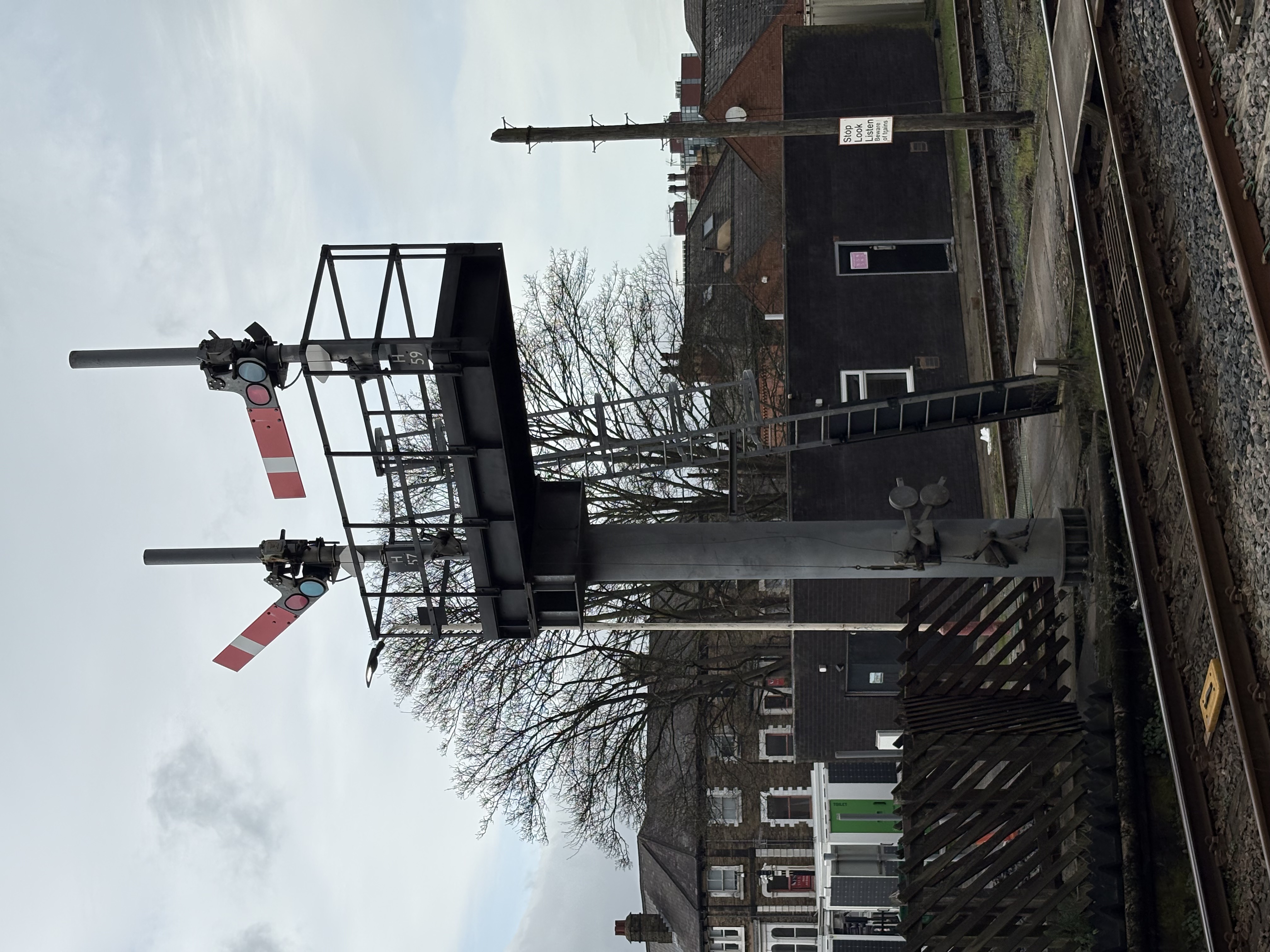
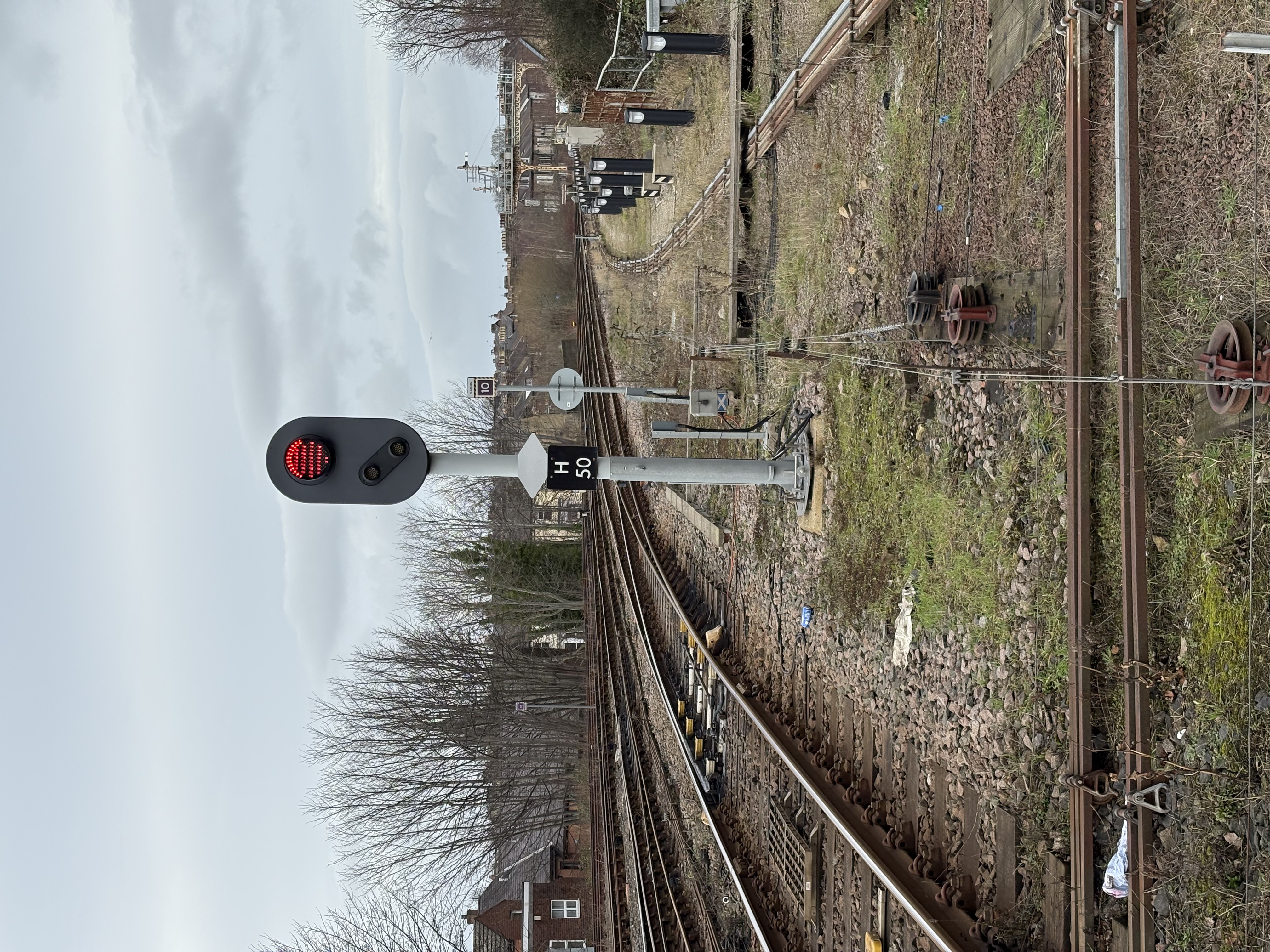
The 2½ hour visit quickly passed, aided by the interesting commentary provided by Matt. A thoroughly worthwhile and enjoyable visit, offering a small insight into just how complex the British railway system is in 2026.